Freya Roth · 7 September 2026
Tracing Botanical Supply Chains Reveals Overlooked Connections Between Traditional Cultivation Practices and Contemporary Product Development Cycles in Niche Health Sectors
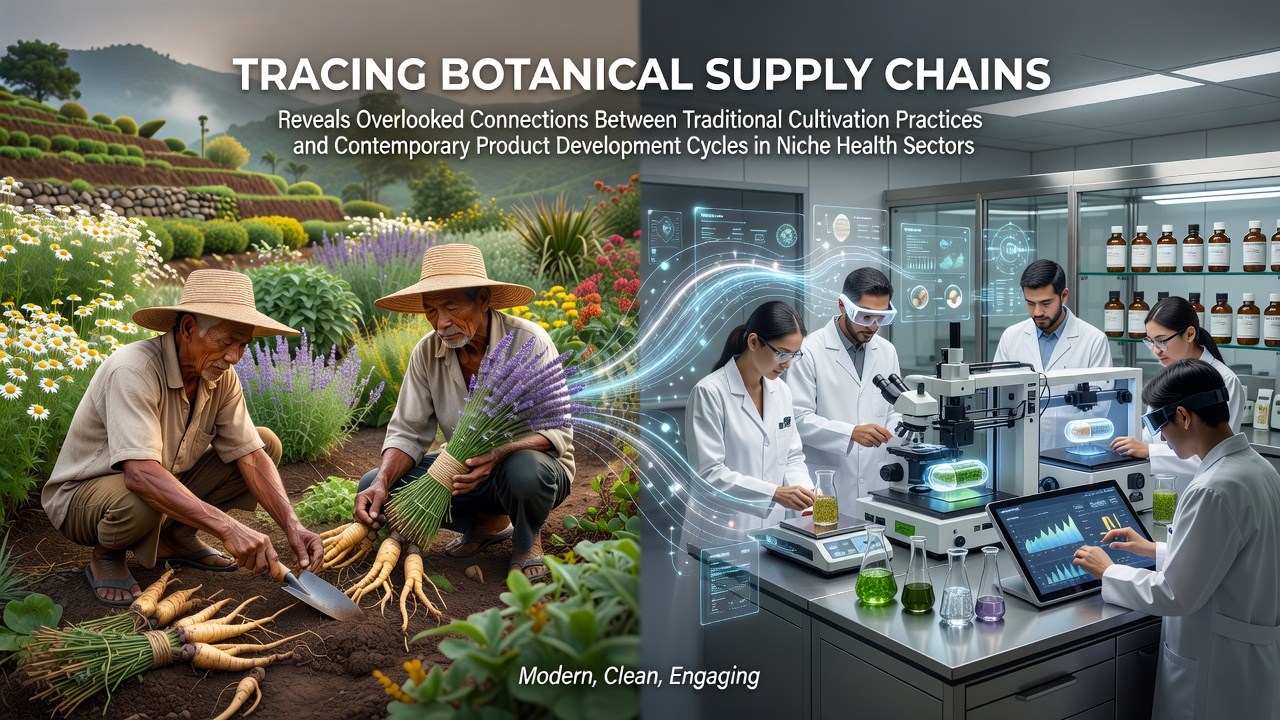
Botanical supply chains stretch across continents and connect age-old farming methods with today's specialized health product lines, and researchers continue to document how these pathways operate in practice. Traditional cultivation often involves small-scale growers who rely on generational knowledge of soil conditions, seasonal timing, and plant selection, while modern development cycles demand consistent raw material volumes, standardized quality metrics, and regulatory compliance for items such as herbal extracts and functional botanicals. Data from international agricultural reports indicate that these two ends of the chain intersect more frequently than many supply chain maps initially suggest, especially in sectors focused on adaptogenic herbs, medicinal teas, and plant-based wellness formulations.
Traditional Cultivation Practices in Key Regions
Smallholder farmers in parts of India, China, and Brazil maintain cultivation systems that emphasize biodiversity and low-input techniques, and these methods supply a significant portion of the raw botanicals used in niche health products. Studies compiled by the Food and Agriculture Organization show that growers in these areas often intercrop species like ashwagandha or maca with local staples, which helps preserve soil health while meeting export specifications for purity and potency. Observers note that such practices produce batches with variable chemical profiles compared to monoculture systems, yet processors downstream have developed extraction and testing protocols that accommodate this variability rather than eliminating it. In September 2026 several regional agricultural agencies plan to release updated datasets on harvest volumes, which should clarify how these traditional plots contribute to global botanical flows.
Mapping the Journey from Farm to Formulation Lab
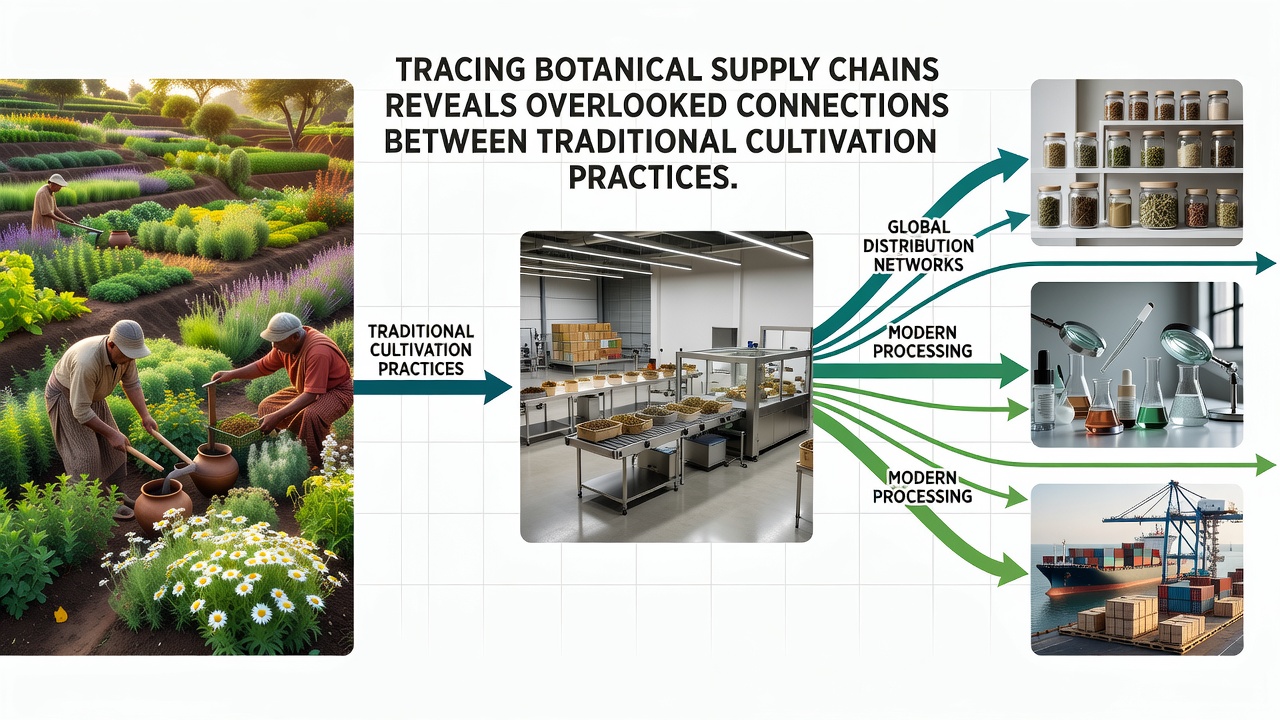
Once harvested, botanical materials move through collection points, drying facilities, and export hubs before reaching manufacturers who convert them into capsules, tinctures, and topical blends, and traceability tools such as blockchain pilots and isotope analysis now allow companies to verify origin details at multiple stages. A report from the World Health Organization outlines how regulatory frameworks in the European Union and Canada require documentation of cultivation methods for certain plant-derived ingredients, which in turn encourages processors to maintain direct relationships with grower cooperatives. These connections reveal that some contemporary product formulas incorporate plant varieties selected generations ago for resilience rather than for maximum yield, and manufacturers adjust their development timelines accordingly to account for seasonal fluctuations.
Product Development Cycles in Niche Health Markets
Formulation teams in the niche health sector typically begin with literature reviews of ethnobotanical records, then move to sourcing trials that test multiple supplier lots for consistent active compound levels, and this process can span 18 to 36 months before a product reaches retail shelves. Research published by academic groups in Australia and the Netherlands indicates that companies frequently revisit traditional growing regions to secure stable supplies of plants like gotu kola or schisandra because those sources align with the sensory and efficacy parameters needed for targeted supplements. Processors in these chains often refine extraction techniques to preserve the full spectrum of compounds that traditional users valued, rather than isolating single markers, and this approach shortens reformulation cycles when new clinical data emerges.
Overlooked Linkages and Data Patterns
Supply chain audits conducted across multiple continents have identified recurring patterns where traditional landraces appear in modern ingredient lists, and these findings stem from both commercial testing and academic field studies. Figures released by Health Canada on licensed natural health products demonstrate that a measurable share of approved botanical inputs originates from cultivation systems that predate industrial agriculture, yet product labels rarely highlight this lineage. Those who track ingredient provenance through customs records and farm registries find that certain cooperatives in Peru and Vietnam have adapted their post-harvest handling to meet contemporary microbial and heavy-metal thresholds without abandoning their core growing calendars. The result is a feedback loop where modern demand influences which traditional varieties continue to be planted, while the plants themselves shape the stability of new product batches.
Regulatory and Traceability Developments
Government agencies in the United States and the European Union have introduced guidelines that encourage or require origin documentation for botanical ingredients, and these rules intersect with voluntary certification programs run by industry bodies focused on sustainable sourcing. A 2025 analysis from an Australian university research team examined how such policies affect small-scale producers, and the data showed increased adoption of record-keeping practices that align traditional harvest logs with digital traceability platforms. Companies developing niche health items use this information to adjust procurement strategies, often prioritizing lots that carry verified cultivation histories because those batches reduce the risk of batch rejection during quality control. External partners, including logistics providers, now offer combined services that bundle farm-level audits with laboratory assays, further tightening the connection between historical practices and current production schedules.
Conclusion
Tracing botanical supply chains continues to expose direct ties between longstanding cultivation knowledge and the operational realities of today's specialized health product development, and the patterns emerging from regional data sets and regulatory records support ongoing examination of these flows. As additional reports become available in September 2026 and beyond, stakeholders across grower networks, processing facilities, and formulation teams will have more precise information to refine sourcing decisions and maintain product consistency.