Freya Roth · 21 September 2026
Shifts in Regulatory Frameworks Impacting Botanical Ingredient Sourcing for Specialized Health Formulations
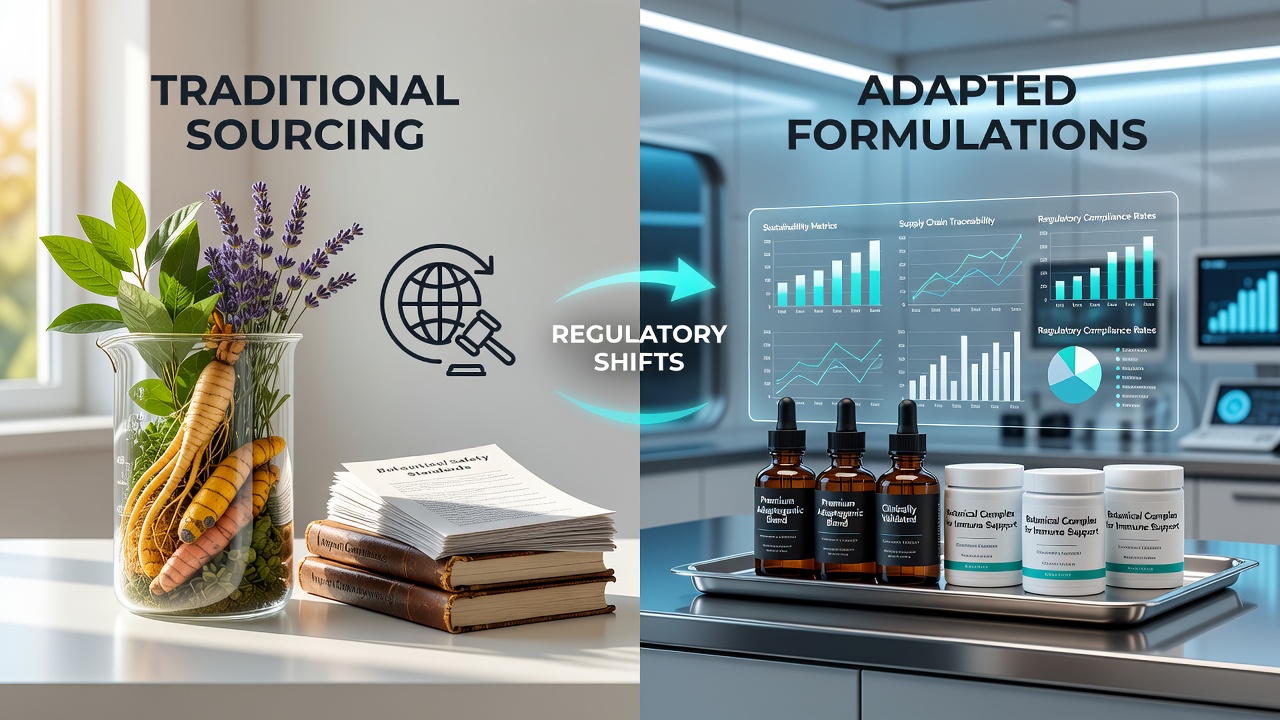
Regulatory bodies across multiple regions continue to refine rules governing botanical ingredients used in specialized health formulations, and these adjustments directly affect how suppliers source, verify, and transport plant materials from farms to manufacturers. Data from industry tracking services show that compliance costs for botanical extracts have risen steadily since 2022 because new documentation requirements now emphasize origin verification, contaminant testing, and sustainable harvesting records. Researchers at academic centers note that companies sourcing ingredients such as ashwagandha, turmeric, and ginseng must now align cultivation records with updated import standards in several jurisdictions at once.
United States Updates on Dietary Ingredient Oversight
The U.S. Food and Drug Administration has expanded its guidance on new dietary ingredients, requiring more detailed safety dossiers for botanical extracts entering the market after 2023. Manufacturers report that this change forces upstream suppliers to maintain batch-level traceability logs that link each harvest to soil testing and pesticide records. Observers note that firms sourcing from India and China have invested in third-party audit programs to meet these expectations, while smaller growers in Latin America have formed cooperatives to share compliance resources. Those who've studied this know the process adds several weeks to procurement cycles yet reduces the likelihood of import detentions at ports of entry.
European Union Traceability Mandates and 2026 Timelines
European authorities have accelerated implementation of the Farm to Fork strategy components that target botanical ingredients in food supplements and herbal medicines. Starting in September 2026, new traceability rules will require digital records showing the precise geographic origin of each botanical batch along with evidence of deforestation-free cultivation practices. Industry reports indicate that this timeline has prompted sourcing teams to shift procurement toward certified regions in Eastern Europe and parts of Africa where satellite monitoring programs already exist. Experts have observed that suppliers without such infrastructure face exclusion from EU supply chains unless they adopt blockchain-based tracking systems within the next two years.
Canadian and Australian Approaches to Natural Health Products
Health Canada continues to enforce its Natural Health Products Regulations with increased scrutiny on identity and purity testing for botanicals, which has led manufacturers to require suppliers to submit validated analytical methods rather than relying solely on traditional certificates of analysis. Meanwhile the Therapeutic Goods Administration in Australia has introduced updated labeling rules that tie ingredient claims directly to documented growing conditions, creating parallel documentation demands for exporters. Those who've studied this know that companies operating across these markets often centralize compliance teams to handle overlapping yet distinct data requirements from each agency.

Practical Effects on Global Sourcing Networks
Procurement specialists describe how regulatory tightening has accelerated vertical integration, with some formulation companies acquiring stakes in cultivation sites to control documentation from seed to extract. Take one researcher who noticed that turmeric suppliers in Vietnam began installing on-site laboratories after EU auditors rejected multiple shipments lacking heavy metal verification data. There's this case where experts found that ashwagandha growers in India adopted organic certification programs at scale once U.S. buyers began demanding residue testing aligned with updated FDA guidance. These adaptations show that sourcing decisions now hinge as much on regulatory readiness as on traditional factors such as yield or price.
Academic studies tracking supply chain responses reveal that regions with established good agricultural practice programs have gained market share, while areas lacking formal oversight have seen reduced export volumes for specialized health ingredients. Figures reveal that the cost of meeting combined U.S., EU, Canadian, and Australian standards can exceed fifteen percent of raw material value for complex botanicals, prompting some manufacturers to reformulate products around fewer, better-documented species. Data shows that this consolidation trend has stabilized supply for high-demand extracts yet narrowed the range of available botanical options in certain niche formulations.
Conclusion
Regulatory evolution across North America, Europe, and the Asia-Pacific region continues to reshape botanical ingredient sourcing by layering new verification layers onto traditional agricultural trade routes. Companies that invest early in digital traceability and region-specific compliance infrastructure maintain access to key markets, whereas those that delay face procurement bottlenecks and higher rejection rates at borders. The cumulative effect points toward a more consolidated yet better-documented supply base for specialized health formulations by the end of the decade.