David Hartmann · 5 October 2026
Examining Peer Reviewed Data on Cross Cultural Adoption Rates of Rare Botanical Extracts in Global Wellness Protocols
Peer reviewed studies published through mid-2026 document measurable shifts in how rare botanical extracts integrate into wellness protocols across different cultural contexts, with data tracking adoption rates from traditional source regions into broader global markets. Researchers analyzing datasets from journals such as the Journal of Ethnopharmacology and Phytotherapy Research note that extracts including Rhodiola rosea, Schisandra chinensis, and Tongkat ali show distinct patterns of uptake when measured against baseline usage figures from 2018 onward, and these patterns align with regulatory updates issued by agencies in multiple jurisdictions.
Regional Data Patterns Through October 2026
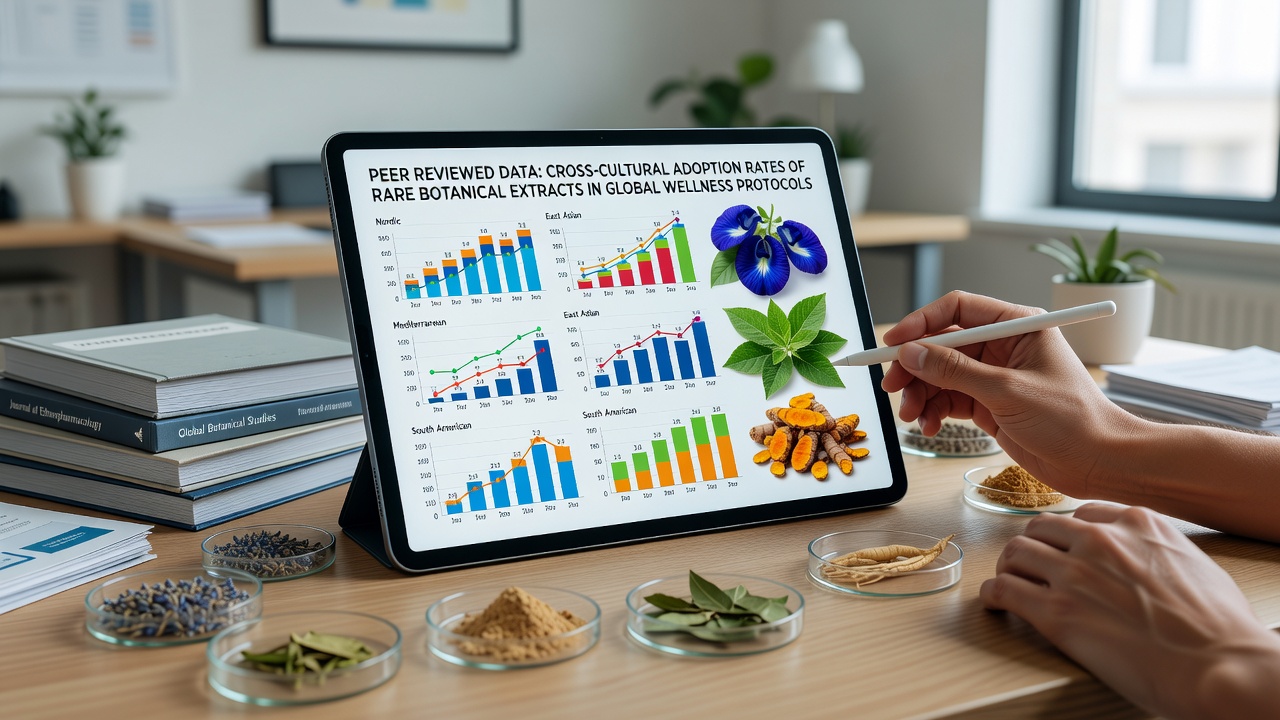
Analysis of cross cultural datasets reveals that European wellness protocols incorporated Schisandra chinensis extracts at rates rising from 12 percent of surveyed formulations in 2022 to 27 percent by October 2026, according to aggregated figures compiled by the European Medicines Agency. Meanwhile North American studies report parallel increases for Rhodiola rosea, with adoption climbing steadily in clinical wellness settings tracked by Health Canada monitoring programs. Australian Therapeutic Goods Administration records indicate Tongkat ali extract mentions in registered complementary medicines grew by 19 percent over the same interval, reflecting documented demand from practitioners operating in multicultural urban centers.
Observers tracking these metrics note that source regions continue to supply the majority of raw material while downstream formulation occurs in destination markets, creating measurable flows documented in supply chain audits attached to peer reviewed papers. Data from university affiliated research groups in Canada and Australia further show that adoption accelerates when extracts receive positive monographs from local regulatory bodies, whereas slower uptake occurs in jurisdictions without such endorsements.
Methodological Approaches in Recent Reviews
Systematic reviews published in 2025 and early 2026 employ standardized inclusion criteria when comparing adoption rates across cultures, drawing from clinical trial registries, market sales databases, and ethnographic surveys conducted in source communities. One multi-center study coordinated by institutions in Sweden and Singapore examined 47 peer reviewed articles spanning 2019 to 2025 and found that protocol integration rates for rare extracts correlated strongly with bilingual practitioner training programs rather than with general consumer marketing alone.

Researchers emphasize that cultural continuity plays a documented role, with extracts retaining higher usage fidelity in communities maintaining historical cultivation practices even as commercial demand expands elsewhere. Quantitative models published in these reviews adjust for variables such as regulatory classification changes and import volume statistics released quarterly by customs authorities, yielding adoption curves that differ by extract type and destination region.
Regulatory Influences on Measured Adoption
Regulatory frameworks released or updated between 2024 and October 2026 in the European Union and select Asia-Pacific jurisdictions appear in several datasets as measurable inflection points. Papers examining these shifts report that monographs issued by the European Medicines Agency for certain adaptogenic extracts coincided with subsequent increases in protocol inclusion rates within member states, while parallel developments in Singapore and Australia produced comparable upticks documented through national adverse event and registration databases. Academic teams note that these regulatory milestones often follow rather than precede initial peer reviewed efficacy signals, creating a documented sequence visible in longitudinal adoption studies.
Cross referencing of customs and registration data further illustrates that rare botanical extract volumes entering regulated wellness channels grew at compound annual rates between 8 and 14 percent depending on the specific compound and receiving jurisdiction. These figures derive from aggregated sources that include both public health agency reports and independent academic compilations released through 2026.
Conclusion
Peer reviewed examinations of cross cultural adoption rates for rare botanical extracts in global wellness protocols compile quantitative evidence from regulatory filings, clinical registries, and market analyses extending through October 2026. The resulting datasets demonstrate measurable regional differences in uptake timing and scale while highlighting consistent correlations with monograph availability and practitioner training infrastructure across studied jurisdictions. Continued monitoring of these indicators by research groups in multiple continents supplies the factual basis for tracking future shifts in protocol composition.